
By Brian Boone
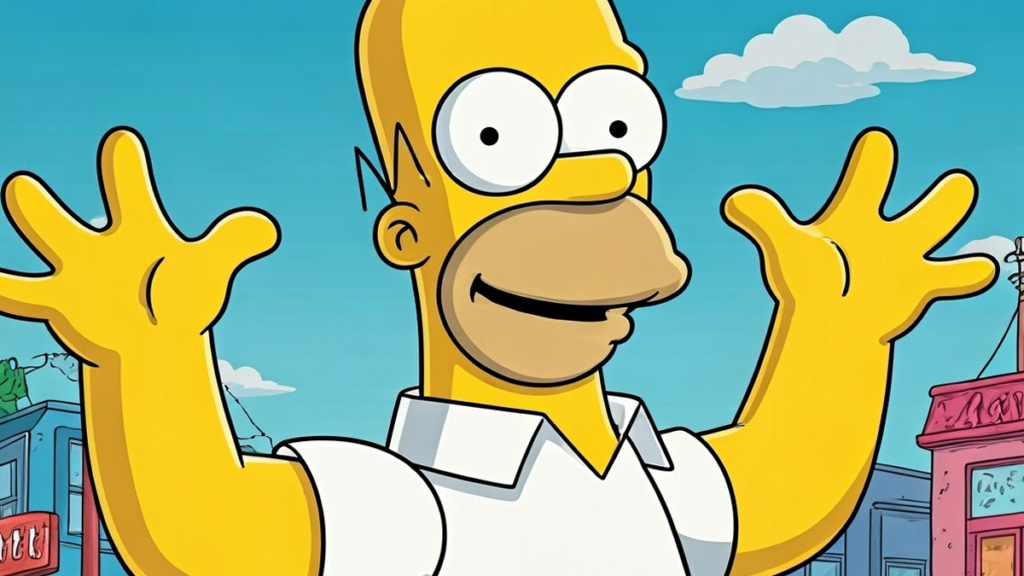
On this day in 1989, The Simpsons debuted. That’s not technically true, however. Here’s a look back, almost 40 years later, on the rise of The Simpsons. Mmmm…origins…
The Shorts
Shortly after the Fox network went on the air as a handful of shows in a handful of American cities in 1986, production got underway on The Tracey Ullman Show, a ‘70s-style variety show updated for the ’80s and starring British comedian and singer Tracey Ullman. Producer James L. Brooks wanted to include animated segments. He enlisted cartoonist M.K. Brown to make “Dr. N!Godatu” about a goofy therapist, and he wanted Matt Groening to pitch something, perhaps an adaption of his underground, surreal comic strip “Life in Hell.” Realizing moments before his pitch meeting that Fox would own the rights to his strip, Groening instead came up with an idea on the fly about a mildly dysfunctional family. He named the characters Homer, Marge, Lisa, and Maggie after his own parents and sisters, and came up with Bart to be an anagram for “brat.” The first “The Simpsons” short aired on The Tracey Ullman Show in April 1987. It would air for 48 installments; “Dr. N!Godatu” lasted for six.
The War of the Roses
A now largely forgotten dark comedy for adults helped introduce Americans to the sharp, family-friendly comedy of The Simpsons. An animated short routinely played in front of theatrical movies in the mid-20th century, and the idea was briefly revived in the late 1980s, led by a Roger Rabbit cartoon with Honey, I Shrunk the Kids, and one featuring the Simpsons playing with The War of the Roses. Thematically, it was a good match. The War of the Roses was about a warring couple in the middle of a contentious divorce, while “Family Therapy” depicted the Simpsons on a psychiatrist visit, which descends into chaos and light violence. The War of the Roses, which featured Homer Simpson voice actor Dan Castellaneta in a supporting role, opened to packed theaters on December 8, 1989 — nine days later, “Simpsons Roasting on an Open Fire” aired on Fox.
The First Episode
“Simpsons Roasting on an Open Fire,” which first aired in primetime on Fox on December 17, 1989, is regarded as the first full-length episode of The Simpsons. Up until then, the yellow-hued family and other residents of Springfield (state unknown) starred in shorts on The Tracey Ullman Show. “SImpsons Roasting on an Open Fire” sets the tone for the series — bad-boy Bart gets a tattoo, Homer winds up working as a mall Santa, the family acquires its dog, Santa’s Little Helper from a racetrack — but it’s not really Episode No. 1. It’s a Christmas special; the real first, regular installment, “Bart the Genius” was broadcast nearly a month later, in January 1990. The intended first episode, “Some Enchanted Evening,” was beset by so many production problems that it didn’t hit the air until May 1990.
Get Uncle John's Know It All Bathroom Reader Today!
Millhouse
By 1988, “The Simpsons” was the most popular recurring segment on The Tracey Ullman Show and a cult favorite, prompting the advertising agency in charge of Butterfinger to come calling. A deal was made, and a script was prepared for the first commercial, concerning Bart Simpson trading lunch items with a school friend. No friends for Bart had been introduced on Ullman yet, so Groening suggested the team use a character he’d drawn for a never-made Saturday morning cartoon about a grade school. The artists picked a nerdy, shy kid, whom Bart swindles out of a Butterfinger. He later became a character on The Simpsons, and after Groening named him Millhouse, because he thought that would be a hilariously terrible name for a kid.
Dr. Hibbert
At the beginning of its second season, Fox moved the modern and snarky The Simpsons from Sunday evenings to Thursdays, where it would square off against the squeaky clean ratings juggernaut that was NBC’s The Cosby Show. Still popular but getting a bit dated, Simpsons writers added a character to directly make fun of the competition, its star Bill Cosby, and his character, Dr. Heathcliff Huxtable. Dr. Julius Hibbert, like Dr. Huxtable, likes to wear vibrant sweaters, has a huge family, and laughs all the time, even when he shouldn’t.
Mr. Burns
In another bit of real-life inspiration for a Simpsons character that also worked as an act of teasing, Mr. Burns — the evil Springfield Nuclear Power Plant owner, richest and most powerful man in Springfield, and Homer’s cruel boss — was based on the boss. While his personality is based on accounts of oil baron John D. Rockefeller and the over-the-top selfishness of Mr. Potter, the bank operator from It’s a Wonderful Life, his slumping, calculating posture takes cues from a praying mantis and then-Fox head executive Barry Diller.