When Did “The Present” Begin?

It’s a harder question than it sounds. Does the present refer to right this second?
Today? This year? The past few years? Fortunately, science has the answer.

The PresentDifferent scientific disciplines, cultures, and religions base their calendars on different “zero” moments. In geology, as well as other scientific disciplines, the epoch of time referred to as “the present” began on January 1, 1950. It’s a somewhat arbitrary, compromise of a date, but a fixed moment in the study of things that takes a really, really long time to change or move.

Dog Islands

These far-flung locales are going to the dogs…that is if they haven’t already.

Snoopy Island

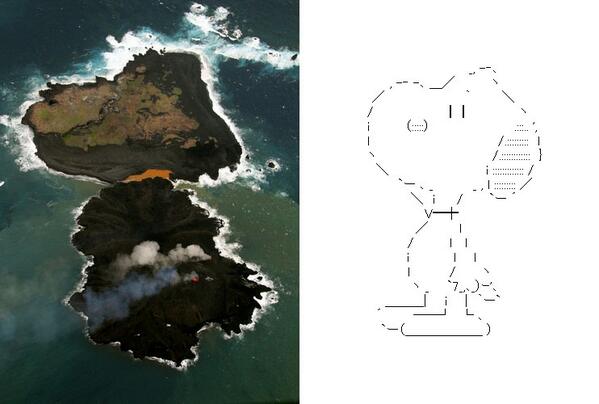
Snoopy IslandNishinoshima lies off Japan’s Pacific coastline and is best known for its active volcano, which last erupted in November. The ensuing lava flow created an entirely new island called Niijima. But the volcano wasn’t quite done. In the weeks that followed, it spewed out enough lava to connect the two islands as one. This strange event caused many a volcanologist to cry “good grief!” when they first saw aerial photos of the new, improved Nishinoshima: because the island now strongly resembles Snoopy. However, Japanese scientists aren’t ready to rename it “Snoopy Island” just yet. They say that the volcano is still active and that Nishinoshima’s current shape may only be temporary.

California, There They Go!

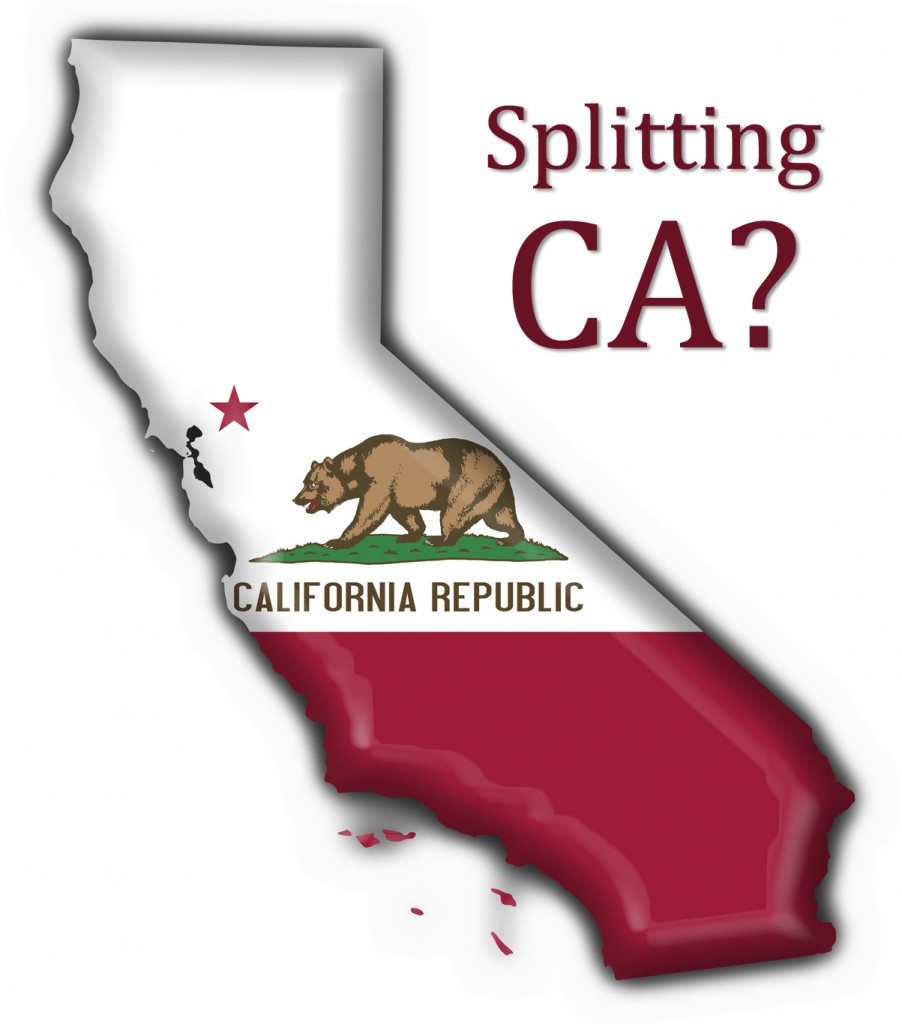
CaliforniaEarlier this year, we told you about some communities around the country aiming to separate from their states to create brand new U.S. states. Add another candidate to the mix—this one’s in northern California.

In September 2013, citizens and officials in Siskiyou County, the northernmost county in California, met to discuss their dissatisfaction with, and alienation from, the state government in Sacramento. Siskiyou, along with a lot of northern California, is primarily rural, and the economy is driven by farming and logging. Much of the rest of California is highly populated, urban, and leans to the left politically. Feeling that they shouldn’t be government by a government that doesn’t have its needs at heart, the Siskiyou County Board of Supervisors voted 4-1 in favor of a declaration to secede from California.

Happy Birthday, Elvis (From Some Other People Named Elvis)

other people named elvisElvis Presley is probably the most iconic rock star of all time and certainly the most famous person ever named Elvis. On what would have been his 79th birthday, here are some other notable “Elvi.”

The Funny Elvis

Ylvis are a Norwegian comedy duo. Pronounced “ill-vis,” it’s an abbreviation of the duo’s last name, brothers Bard Yylvisaker and Vegard Ylvisaker. Ylvis hosts I kveld meld Ylvis, or Tonight with Ylvis, a popular sketch comedy show in Norway. Their best-known work is a silly music video called “The Fox (What Does the Fox Say)” which spread around the world via YouTube and has racked up more than 320 million views. The song, about how nobody seemingly knows what kind of animal sound a fox makes, hit #1 in Norway and #6 in the U.S.—the highest-charting novelty song in more than 20 years.

It’s Time for ‘Time’ Person of the Year!

Once again, Uncle John came in at #2.

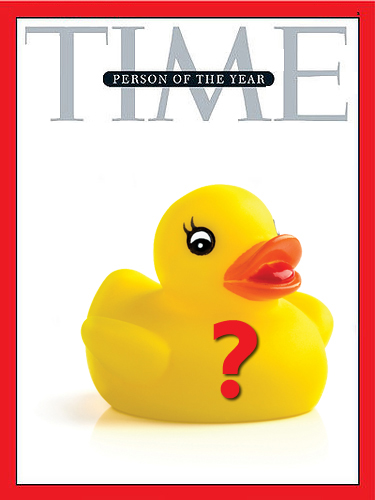
Entertainment Weekly publishes a list of the year’s top movie’s each December. Rolling Stone prints a list of the year’s best albums. The year-end superlatives started in 1927, with Time’s “Man of the Year.” It came about as an idea to fill space during a slow news week (as December often is), and also as a way for Time editors to make good on a mistake from earlier in the year. When Charles Lindbergh made his solo transatlantic flight…Time failed to put him on the cover. To make up for it, editors made Lindbergh Time’s “Man of the Year,” recognizing him as the year’s most dynamic newsmaker.

8 Quick Facts About “White Christmas”

Stuff you didn’t know about the most popular Christmas song of the 20th century.

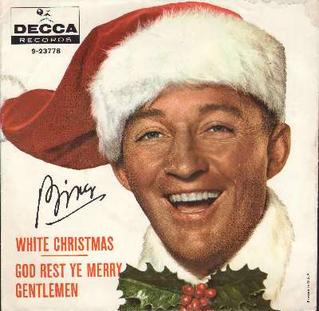
Facts About White Christmas• Legendary songwriter Irving Berlin wrote the song from the point of view of a New Yorker (like himself) stuck in warm California for Christmas (as he had been). That sentiment was made explicitly clear by the song’s original first verse, which mentions “the sun is shining,” “the grass is green,” and things like palm trees and Beverly Hills.

• “White Christmas” was picked to be included in the 1942 Bing Crosby movie Holiday Inn—both Crosby and his producer thought that the song wouldn’t have much worth outside of the movie with that verse. So it was dropped.

Ford Mustang: Car of the ’60s

With the international reveal of the sixth generation Mustang on its 50th anniversary, we revisit this iconic car’s history. The original Ford Mustang, a sporty car for “everyman” introduced in 1964, is now a symbol of the entire decade. Here’s a bit of its history.

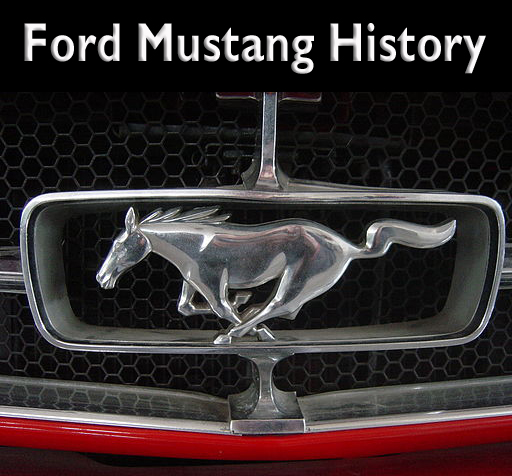
ford mustang historyThe Mustang was the most successful new car ever introduced by the American auto industry. But in terms of the ’60s, it was more than a car. Its popularity was an expression of the simple truth of the decade—that everyone wanted to look, feel, and act young.

4 Quick Stories About Time Travel

In honor of the 50th anniversary of “Doctor Who,” here are some stories about some people who claimed to have unlocked the secret of time travel…or maybe not.

Time travel• In 2000, a mysterious man named “John Titor” started posting messages on Internet paranormal discussion forums claiming to be a time traveler from the year 2036. He’d been sent back in time by the U.S. government, he said, to fix software bugs that were making computers in the future malfunction. Titor not only showed off pictures of his time machine (a modified 1967 Camaro), but detailed the scary world events between the years 2000 and 2036. For example, from 2004 to 2008, the second American Civil War was waged; that the 2004 Olympics were the last ones ever held; and that in 2015, Russia started World War III by dropping nuclear bombs on China, the U.S., and most of Europe. Three billion people died and all major world governments crumbled. In March 2001, Titor claimed his IT duties were complete and he “returned” to 2036…which means he never posted on Internet forums again. Obviously, you can figure out that Titor’s details of the future history weren’t quite accurate, making this a hoax. But who was behind it? Nobody knows.

5 Quick Facts About John F. Kennedy

Some things you probably didn’t know about the 35th president,
who was assassinated 50 years ago this month.

Facts about John F. Kennedy• It’s political lore that John F. Kennedy won the 1960 election on the strength of the first-ever televised presidential debates: Kennedy appeared calm and collected, and wore makeup to look good on TV, while his opponent, Richard Nixon, seemed nervous and sweaty. Kennedy may have won the image game, but the debates didn’t hand him the keys to the White House. Gallup polls throughout 1960 show a very close race…and so did the outcome. Kennedy beat Nixon handily in the Electoral College (303 to 219), but got just 112,000 more votes, out of 68 million total.

The Curious History of “666”

Even if you aren’t into heavy metal, you probably know that “666” is a number associated with evil. How come? The devil is in the details. Here is a history of 666.

history of 666The Book of Revelation was written in Greek sometime between 70 and 95 A.D., by an author known only as John. While its most commonly associated with scary, cryptic, or apocolyptic imagery, it’s really only the 13th chapter of Revelation where that’s present. It begins with a letter to the reader, then describes cataclysmic events of the end times John says he saw in a series of visions.

It’s in Revelation (13:8) where “666” is mentioned—the only time in the Bible: “Here is wisdom. Let him that hath understanding count the number of the beast: for it is the number of a man; and his number is Six hundred threescore and six.” Doing a bit of quick math, in which a score is 20, the number adds up to 666. Whoever is represented by this number then, the text indicates, is pure evil.

Weird Holiday: St. Martin’s Day

The holiday may not be familiar to you, but the customs certainly are.

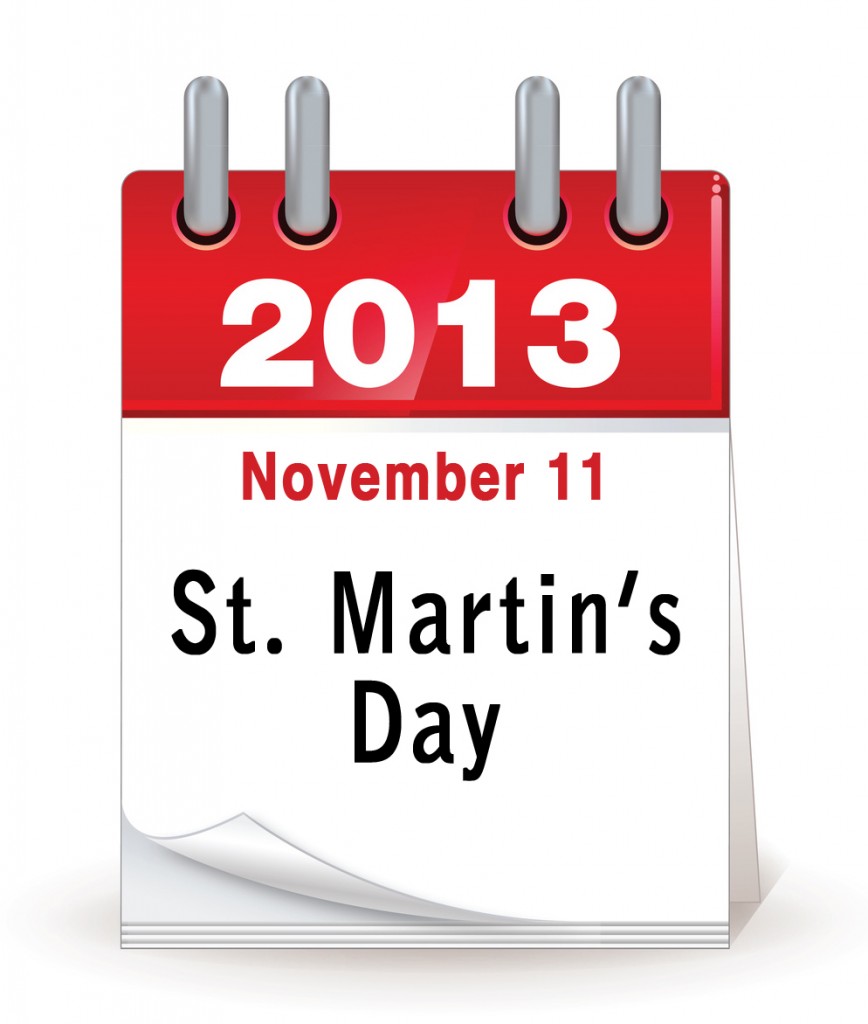
Basic CMYKMartin of Tours seemed like a decent guy. Legend has it that in the 4th century, he gave up his job as an elite soldier in the Roman army to become a priest after helping out a beggar one night. He ultimately became a bishop, and a pacifist devoted to spreading peace, love, (and Christianity) across western Europe.

He was sainted shortly after his death, and his feast day is November 11, marking the day he was buried in 397. Though obscure in the U.S., St. Martin’s Day is widely celebrated in Europe, making it one of the oldest continuously observed holidays in the world.

The customs vary by location, and many are reminiscent of American customs for other holidays:

• In Belgium and the Netherlands, St. Martin’s Day is celebrated much more like Halloween. Children make paper lanterns and, once its dark, go door-to-door in search of candy. Instead of saying “trick or treat,” they sing songs or recite poems about St. Martin. In some communities, the search for candy begins at a local church and the kids are marched through the streets with a horseback actor dressed as Saint Martin leading the way. Afterward, there’s often a bonfire in a large public square and everybody eats pretzels.


It’s Devil’s Night!

Today is Halloween, but the tricks started yesterday with Devil’s Night.

Falling on October 30th, Devil’s Night is also known as “Mischief Night,” “Cabbage Night,” or “Hell Night.” No matter what it’s called, it’s probably the nastiest holiday in Europe and North America.

Serving as a mean-spirited counterpart to the more innocent traditions of Halloween, Devil’s Night is celebrated by pulling pranks instead of “tricks.” It’s also a lot newer than the medieval festivals that gave way to Halloween. Devil’s Night began in 1790 as Mischief Night. A headmaster of St. John’s College at Oxford put on a play, followed by an “Ode to Fun,” which encouraged students to play pranks (like throwing cabbages at houses). Students obliged and it became an annual tradition…in early May. In the 19th century, the night switched to the evening prior to Guy Fawkes Day, and finally settled on October 30th around the turn of the 20th century, which is also when the holiday spread to the U.S., particularly Detroit.

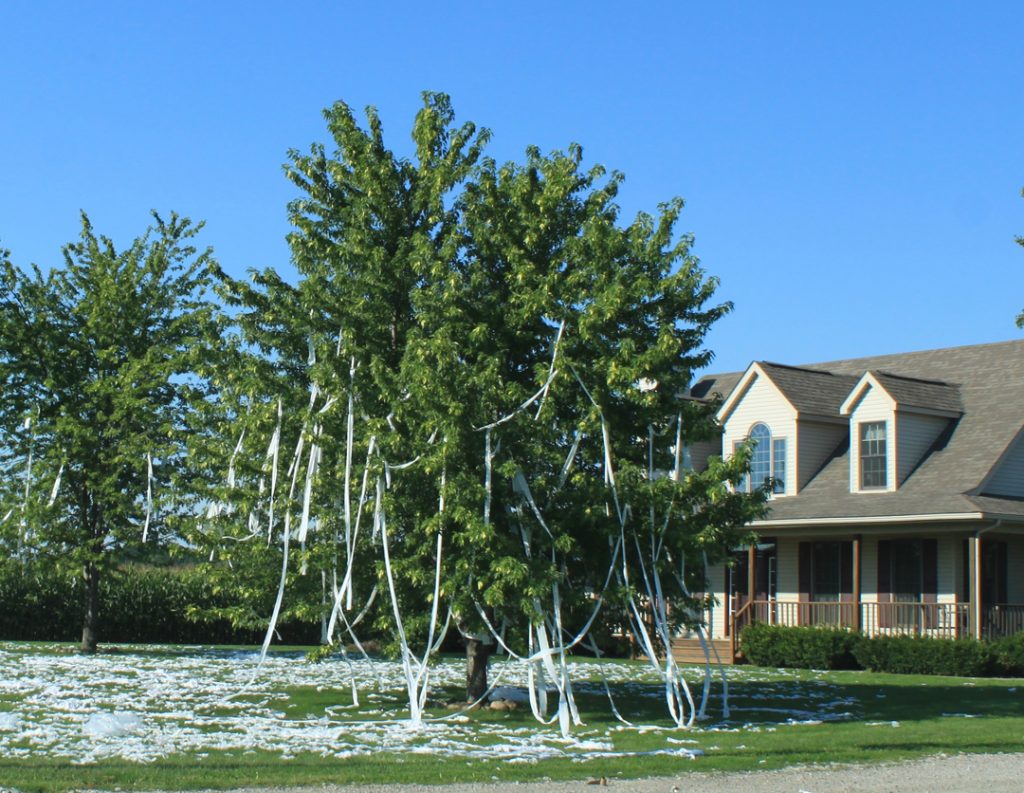
devil's nightTypically, the pranks are as harmless as covering a neighbor’s tree in toilet paper or smashing a few pumpkins. Things started getting out of hand in the ‘70s. In Detroit, Devil’s Night is marked by acts of major vandalism, property damage, and even arson. In 1984, for example, more than 800 fires were reported.

History of Halloween

Halloween is Uncle John’s favorite holiday. Why? It’s the one day of the year he looks “normal!” Here’s a quick history of Halloween.

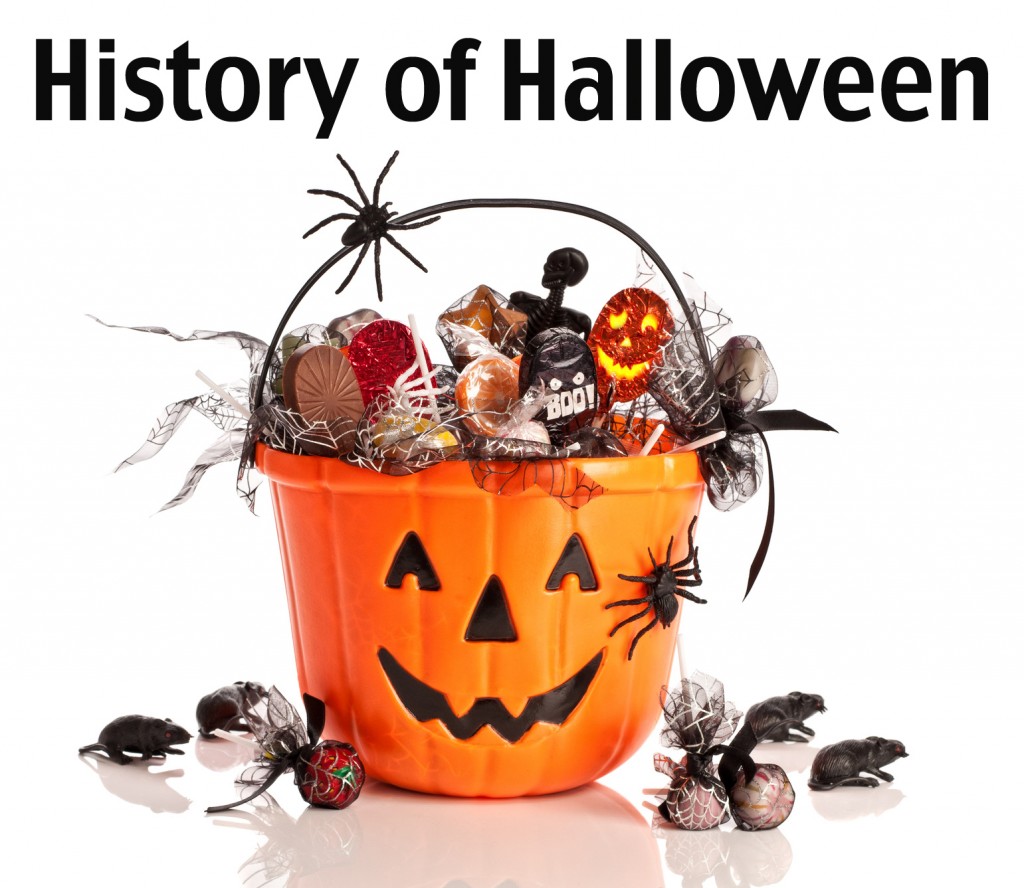
History of Halloween

ANCIENT ORIGIN

The ancient Celts in the British Isles celebrated their new year on November 1. Their New Year’s festival was called Samhain (pronounced sow-wen), which means “summer’s end.” Early Christians adopted the festival in the seventh century A.D., making November 1 a celebration of saints and martyrs—hence the name All Saints’ Day or All Hallows’ Day. (Hallow comes from an Old English word meaning “holy.”) The night before All Saints’ Day was known as All Hallows’ Even (evening)— which was shortened to “Hallowe’en.”

ANCIENT MYSTERY

What’s Halloween’s connection to ghosts and costumes? No one’s sure, but historians offer these three possibilites.

Theory #1: The Ghosts Are Hungry!

On All Hallows’ Eve, evil spirits roamed the Earth in wild celebration, ready to greet the arrival of “their season”— the cold dark winter. And just for fun, they liked to frighten mortals. One way for scared humans to escape the demons was to offer them food and sweets. Another way was to dress up like spirits and roam around with them…hopefully going unnoticed. “That is what the ancient Celts did,” explains Francis X. Weiser in The Handbook of Christian Feasts and Customs, “and it is in this very form that the custom has come to us.”

Weird Holiday: It’s German Unity Day

Get a little closer…the German way. It’s German Unity Day.

German Unity DayJust about every country on the planet has some kind of national day. These public holidays involve citizens celebrating their country’s heritage and traditions. The observance date is often placed on a day that the country became independent of another country: America, for example, has Independence Day (July 4th), Canada has Canada Day (July 1st), and Macedonia has Den na Nezavisnosta (Sept. 8th). And these holidays almost always involves fireworks. Why? Because everybody loves fireworks.

Germany has a national holiday, too, but unlike those other countries, they celebrate unification, not separation. Tag der Deutschen Einheit, literally “German Unity Day,” falls on October 3rd and observes the day in 1990 that West Germany and East Germany combined back into a single Germany after more than three decades of separation.

The Search for the National Geographic Afghan Girl

This October marks the 125th anniversary of National Geographic. To celebrate, we take a look at the most famous photographs of the 20th century: the National Geographic Afghan Girl. This story was originally published in Uncle John’s Slightly Irregular Bathroom Reader.

national geographic Afghan girlSNAPSHOT

In December 1984, a National Geographic photographer named Steve McCurry visited the Nasir Bagh refugee camp on the Afghan/Pakistan border while covering the war between the Soviet Union and Afghanistan. While there he snapped a photograph of a 12-year-old girl with haunting blue-green eyes. The girl had been living in the camp ever since Soviet helicopters had bombed her village five years earlier, killing both her parents.

McCurry didn’t have a translator with him that day, so he never got the girl’s name. But the photograph, which appeared on the cover of the June 1985 issue, went on to become the single most recognized photograph in National Geographic’s 125-year history and one of the most reproduced images in the world.

Restaurant Firsts

We’re becoming more and more of a restaurant culture.

Retro Eat Sign ThunderstormFirst restaurant to note GMOs: In 2013, the Mexican fast-food chain Chipotle became the first chain to adopt a policy to note on its menu what of its ingredients were of “genetically modified origin.” The only ingredient, so far: soybean oil, used to cook meat.

First green salad: The prime rib restaurant Lawry’s opened in Beverly Hills in 1938. One of the their hallmarks was, and still is, tableside service—an employee wheels a cart to your table and carves off a slab of prime rib (as that was once the only entrée offered). But before the meal, another employee wheels another cart around, table to table, and tosses fresh green salads for guests. Included in the price of the meal, this was the first time an American restaurant offered a salad course.

First restaurant to accept bitcoin:Bitcoin” is an electronic currency, invented in 2010 by Satoshi Nakamoto, used exclusively over the Internet. And now, at least one place in the “real world.” In 2013, Bubba’s Firehouse Barbecue in Salt Lake City, Utah, started accepting bitcoin as a form of payment. (The owner is a big fan and online user of bitcoin.)