
Stars Who Left Their Massive Bands and Became One-Hit Wonders
Some of the biggest rock stars in history just couldn’t cut it without their bands. They went solo and became one-hit wonders.


Some of the biggest rock stars in history just couldn’t cut it without their bands. They went solo and became one-hit wonders.
It’s the 21st night of September, so ba-dee-ya, let’s groove to this look into Earth, Wind & Fire’s glorious “September.”
It’s Beatlemania all over again around here, both in this article filled with little-known facts about the Beatles, and in our publishing sibling Thunder Bay Press’s new book, The Beatles: Illustrated Lyrics,So get back, come together, drag a comb across your head, and get ready to love eight days worth of facts. The Beatles’ “White […]
John Lennon was tragically assassinated in 1980. But according to some people, the Beatle never completely left the earthly realm. And your bird can sing In 1995, the three surviving Beatles at the time — George Harrison, Paul McCartney, and Ringo Starr — reunited for the first Beatles recording in decades. They added their vocals […]

Are your kids super into BTS, and other K-pop singing groups? Here’s a little primer so you can figure out what they’re talking about. K-pop. Korean pop music, generally sung by medium-to-large groups of telegenic singers while performing complicated choreography. Bagel. It’s a portmanteau to describe pop stars who are both baby-faced and glamorous. Bias. A good bias — favoritism or […]
With virtually all of recorded music at your fingertips when you open Spotify or Apple Music, it can be overwhelming to decide what to listen you. Allow us to help: Avoid these albums at all costs. Kevin Federline, Playing with Fire Hitting stores in 2006 was the first (and so far, only) album by Federline, a […]
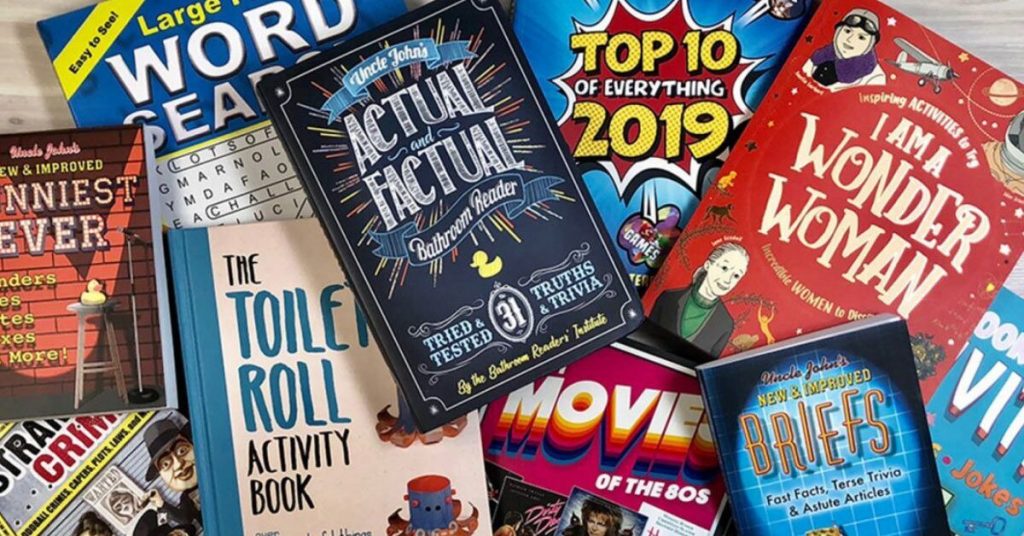
On February 9, 1964, Beatlemania took the U.S. by storm—that’s the night the Beatles played for the first time on the top-rated The Ed Sullivan Show. Here’s a look at that iconic episode, which aired 50 years ago this week.
 The Ed Sullivan Show was a variety show, and the Beatles were one of the first times the show had booked a rock n’ roll act. The rest of the show’s running time was filled with the usual array of Sullivan performers: comedians, performances from a Broadway musical, and even a magician.

More than 40 years after the first Super Bowl broadcast, the halftime show is no longer just something to fill TV airtime while the football players rest—it’s now a spectacle unto itself.
 1967: Marching bands from the universities of Arizona and Michigan perform.
1970: The NFL experiments with big-name celebrity halftime entertainers. Their first big star: Carol Channing.
1972: “A Salute to Louis Armstrong,” with Ella Fitzgerald, Al Hirt, the U.S. Marine Corps Drill Team…and Carol Channing. Armstrong had died the previous summer. Songs included “High Society” and “Hello, Dolly.”

Musicians often write songs about other musicians—the Commodores’ “Night Shift” is about Jackie Wilson, for example. And sometimes, the musicians who had songs written about them cover those very songs.
 • The Barenaked Ladies’ hit “Brian Wilson” isn’t the most respectful song about the songwriter and major creative force behind the Beach Boys. The song references Wilson’s period in the ‘70s when agoraphobia, drug addiction, and obesity kept him housebound. The chorus of “Brian Wilson” is: “lying in bed / just like Brian Wilson did.” Still, Wilson thought “Brian Wilson” was a pretty good song. When he began recording music and touring again in the 1990s, he made the song part of his set list. A version appears on his 2000 live album Live at the Roxy Theatre.
 Elvis Presley is probably the most iconic rock star of all time and certainly the most famous person ever named Elvis. On what would have been his 79th birthday, here are some other notable “Elvi.”
The Funny Elvis
Ylvis are a Norwegian comedy duo. Pronounced “ill-vis,” it’s an abbreviation of the duo’s last name, brothers Bard Yylvisaker and Vegard Ylvisaker. Ylvis hosts I kveld meld Ylvis, or Tonight with Ylvis, a popular sketch comedy show in Norway. Their best-known work is a silly music video called “The Fox (What Does the Fox Say)” which spread around the world via YouTube and has racked up more than 320 million views. The song, about how nobody seemingly knows what kind of animal sound a fox makes, hit #1 in Norway and #6 in the U.S.—the highest-charting novelty song in more than 20 years.
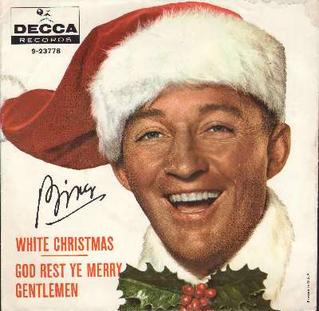
Stuff you didn’t know about the most popular Christmas song of the 20th century.
 • Legendary songwriter Irving Berlin wrote the song from the point of view of a New Yorker (like himself) stuck in warm California for Christmas (as he had been). That sentiment was made explicitly clear by the song’s original first verse, which mentions “the sun is shining,” “the grass is green,” and things like palm trees and Beverly Hills.
• “White Christmas” was picked to be included in the 1942 Bing Crosby movie Holiday Inn—both Crosby and his producer thought that the song wouldn’t have much worth outside of the movie with that verse. So it was dropped.

Every year, the UK goes a little mad as pop stars compete to see who will get the completely ceremonial honor of having the #1 song in the country on Christmas. Here’s a look at this cultural phenomenon, which has no real comparison in the U.S.
 In the 2003 Christmas-set romantic comedy Love, Actually, aging pop star Billy Mack (Bill Nighy) tries to revive his career by trying to get a Christmas #1 with a song called “Christmas is All Around,” a holiday-themed remake of the Troggs’ hit “Love is All Around.” Mack calls it a “festering turd of a record.” It’s a satirical look at the English pop cultural phenomenon of the music industry – and music buyers – guessing what song will be #1 on Christmas Day.

Game shows give away cash and dining room tables. In the ‘80s and ‘90s, MTV gave away stuff like Jon Bon Jovi’s house.
Be in a Loverboy video!
 The ‘80s rock band Loverboy were one of the first big stars of the MTV era. In 1983, they joined up with the video channel for a contest that would allow the winner to be the video for their single “Queen of the Broken Hearts.” A viewer named Bridget Magnesi won the prize. She didn’t exactly get to star in the video—catch a glimpse of Magnesi at the 0:18 and 0:23 marks in the video. She’s the woman sitting behind the control panel.
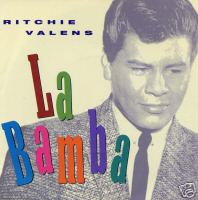
A few weeks ago, we wrote about the Singing Nun, who had an unlikely #1 hit in the U.S. in 1963 with “Dominique,” a song sung in French. Here are some more non-English tunes that topped the American pop chart.
 • A rock version of the folk song “La Bamba” is Ritchie Valens’ best-known and signature song, but upon its release in 1959, it was only a minor hit. As the B-side of the #2-hit ballad “Donna,” “La Bamba” hit #23. But when a movie about Ritchie Valens life and untimely death (he died in the same plane crash that killed Buddy Holly and the Big Bopper) called La Bamba was released in 1987, a cover version by the band Los Lobos hit #1. It’s the first and only time a song sung entirely in Spanish has topped the charts.
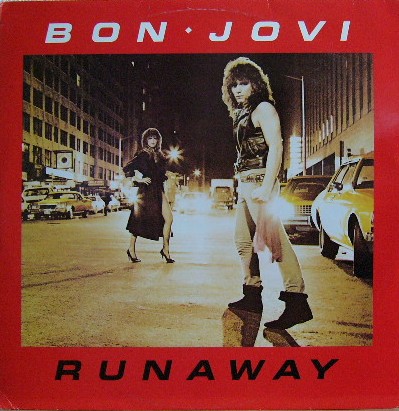
Sometimes the band includes more than just the guys on stage. Here’s a look at rock music’s most notable band members…who aren’t really part of the band.
Hugh McDonald, Invisible Bassist
 Jon Bon Jovi assembled his hard rock band, Bon Jovi, in 1983, which included bassist Hugh McDonald, who played on the group’s first single “Runaway.” The song was a local hit, and when the group got a record deal, Bon Jovi replaced some of his band members, including McDonald, with a new bass player, Alec John Such. Except…he really didn’t. Such was credited as the bass player on five multi-million-selling Bon Jovi albums, but it was really McDonald who was playing. Why was Such, who was reportedly not as accomplished a musician as McDonald, presented as Bon Jovi’s bassist? McDonald was a decade older than Jon Bon Jovi, Such, and the other members of the band. When the band became teen idols in the 1980s, youth (and youthful looks) were important, and McDonald didn’t fit that profile. In 1994, McDonald “replaced” Such, both in concert and on record.
How a forgettable pop song became a priceless collector’s item—“American Memories” is the rarest 45 of a song to have ever made the Billboard pop chart.
Richard Doyle was a standup comedian from Los Angeles who hosted a show on local TV called Comic Talk, where he interviewed other comedians that were part of that city’s rising comedy scene. Doyle was also a musician—in 1973, under the name “Shamus M’Cool,” his Christmas novelty song “Santa’s Little Helper, Dingo” hit #11 on Billboard’s seasonal holiday music chart.
That was the only musical success Doyle had had, but in 1981, he decided to revive his musical career, as well as the “Shamus M’Cool” stage name. He recorded a country rock song called “American Memories,” which wasn’t a comic novelty song at all—it was a look back on triumphant, proud memories in American history. (The B-side: “American Humor,” six-minutes of Ronald Reagan jokes from Doyle’s comedy act, recorded live at the Playboy Club.)

Stuff you didn’t think needed to be improved…just got a little bit better.
A better iPod
 Introduced in 2001, Apple’s iPod revolutionized the way people listen to music—thanks to this and other digital music players, thousands of songs are stored as computer files on a pocket-sized device. But there’s one group who doesn’t like the easy access to music offered by the iPod: audiophiles. In order to get that much music on an iPod, the files are compressed, leading to some loss of layers and nuances in recordings. But a new high-definition, high-sound-quality music player called Pono is on the way—and it was invented by legendary rock star Neil Young. “We’ve liberated the music of the artist from the digital file and restored it to is original artistic quality, as it was in the studio,” Young wrote on Pono’s facebook page. Young announced the Pono player on The Late Show With David Letterman in 2012, and recently said that the player will be for sale in early 2014.
More convenient soup
 One of the most popular new kitchen appliances in the past new years is the single-cup coffeemaker—17 million American homes and offices now have them. Keurig is the industry leader in these devices, which brew one cup of coffee—or tea, or hot chocolate—at a time. Consumers buy packages of individual “K-cups” full of ground coffee, which is placed in a chamber in the machine, where it’s then steeped in hot water, producing a hot beverage in about a minute. In September 2013, Keurig owner Green Mountain Coffee Roasters announced that it had made a deal with Campbell’s to produce K-cups…of soup. In 2014, consumers will be able to buy the two-step soup kits: a K-cup full of dried broth is placed in the machine. Hot water turns the dried broth into liquid broth, which is then poured over an included pack of noodles.

The strange and sad saga of one of pop music’s least likely hitmakers.
 Belgian-born, French-speaking Jeanine Deckers joined The Fichermont Convent in 1959 at the age of 26. Upon taking her vows, she adhered to the custom of picking a new name: Sister Luc-Gabrielle. Living at the convent, she passed the time by entertaining the other nuns with songs about Catholic saints that she wrote and performed on her acoustic guitar.
The superiors at the convent thought Sister Luc-Gabrielle should make a limited-press album—they could sell those records of original religious songs to people who visited the convent or who attended their religious retreats. The convent booked time for the sister at Philips Studio in Brussels in 1962. While it’s fairly common for church choirs or religious performers to self-release an album, then and now, the engineers at Philips thought Sister Luc-Gabrielle was more than just another church singer—they thought her gentle, lilting folk songs could make her a pop star. So they signed her to a contract, and presented her to the public as Soeur Sourire, or “Sister Smile.”