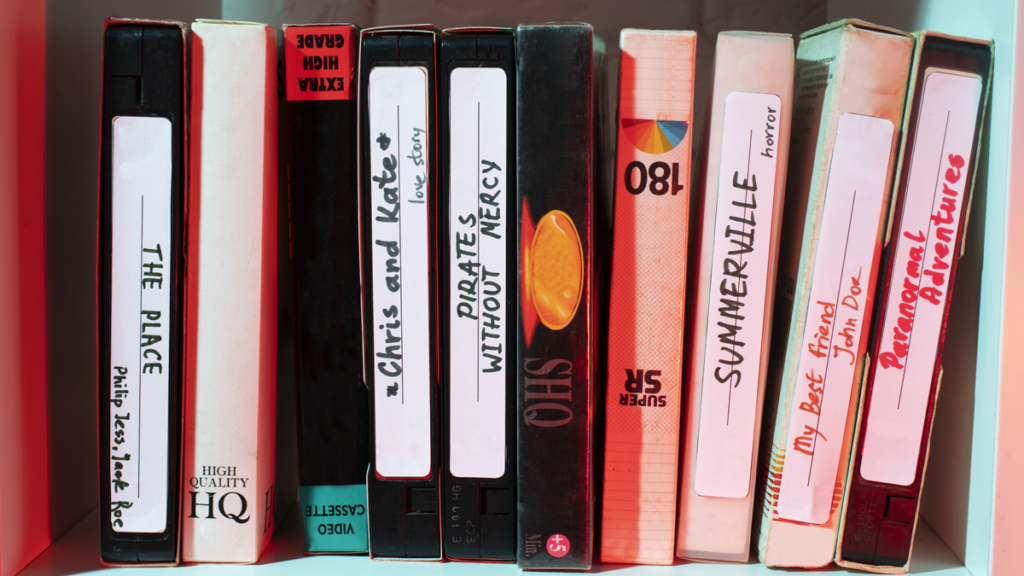
Fire Up the SelectaVision, It’s Movie Night
Streaming has made DVDs and VHS tapes virtually obsolete. Those were about the only two home video formats that were ever successful – unlike these many other also-rans.


Streaming has made DVDs and VHS tapes virtually obsolete. Those were about the only two home video formats that were ever successful – unlike these many other also-rans.

In July 2021, Amazon founder and multibillionaire Jeff Bezos launched himself into space. What’s more surprising about this? He’s hardly the first non-government-agency-affiliated person to reach the edge of the cosmos. Here’s a brief history of private spaceflight. 1961: Just four years after the Soviet Union launched two Sputnik satellites, the first manmade objects to […]

Yes, it’s really happening.
 If you thought the lines were bad at your local Apple Store every time they roll out a new iPhone, just wait until they start selling lightsabers. Scientists recently declared that they have developed technology that could one day lead to the construction of the iconic weapon from the Stars Wars films.

Scientists have created artificial blood. This is not a plot point from True Blood.
 Researchers at Babes-Bolyai University in Cluj, Romania, spent months trying to develop an artificial human blood substitute. While this could be considered a medical miracle and a marvel of modern science, the best part about this is that Cluj is located in the Romanian region of…Transylvania.

Would you eat cheese made out of bacteria from the human body?
 Scent researcher Christina Agapakis, and Sissel Tolaas, a synthetic biologist, learned that microscopic ecosystems inside the human body are often very similar to the bacteria that makes cheese possible. So, with the cooperation of Stanford University and the University of Edinburgh, they followed this information to its natural conclusion: a product called Selfmade, which is “human cheese.”

A trip to the supermarket is stressful enough, and that’s not even counting the body-scanning cameras checking you out while you try to pick out a toilet brush.
Tesco, a chain of grocery and gas station/convenience stores in the U.K., wants to make sure that you’re receiving full access to all of the products you might want to purchase. How? By using body-scanning cameras to scan customers, and then bombard them with customized advertisements. The system is being tested at all 450 Tesco convenience stores, and if successful, it will be installed in the company’s supermarkets.

“bathroomreader.com” got its name from the Bathroom Reader book series. Now you know!”
 Bing. In development, Microsoft’s search engine was codenamed “Kumo,” But Microsoft went with Bing because focus groups said it reminded them of “the moment of discovery.” The company also liked that it was short, easy to spell, and transferable to languages other than English. (Detractors jokingly claim BING is an acronym for “but it’s not Google.”)
Yelp. The business listings and ratings site is in many ways an Internet version of the Yellow Pages. In fact the “yel” in “Yelp” comes from “yellow,” and the “p” comes from “pages.”
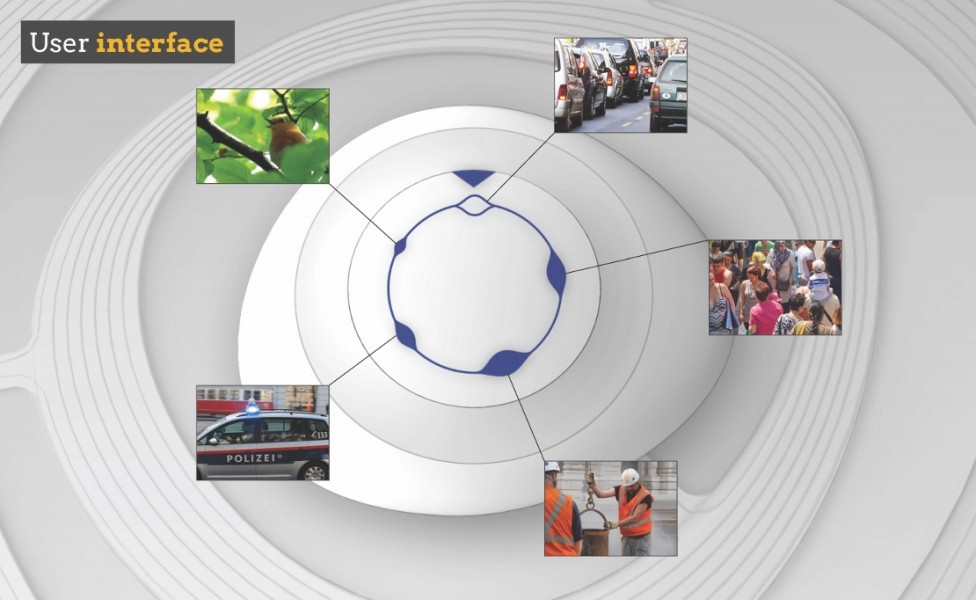
Quieter living through chemistry.
 There’s nothing worse than trying to concentrate on a very important project (like, say, a blog post) while struggling to tune out loud neighbors. If you live or work in an area with heavy traffic or other types of noise pollution, you’ve likely found yourself wishing you could grab a remote control and turn down the volume on the world outside your window.

In honor of the 50th anniversary of “Doctor Who,” here are some stories about some people who claimed to have unlocked the secret of time travel…or maybe not.
 • In 2000, a mysterious man named “John Titor” started posting messages on Internet paranormal discussion forums claiming to be a time traveler from the year 2036. He’d been sent back in time by the U.S. government, he said, to fix software bugs that were making computers in the future malfunction. Titor not only showed off pictures of his time machine (a modified 1967 Camaro), but detailed the scary world events between the years 2000 and 2036. For example, from 2004 to 2008, the second American Civil War was waged; that the 2004 Olympics were the last ones ever held; and that in 2015, Russia started World War III by dropping nuclear bombs on China, the U.S., and most of Europe. Three billion people died and all major world governments crumbled. In March 2001, Titor claimed his IT duties were complete and he “returned” to 2036…which means he never posted on Internet forums again. Obviously, you can figure out that Titor’s details of the future history weren’t quite accurate, making this a hoax. But who was behind it? Nobody knows.

This funny-sounding idea might be the most important “holiday” in the world. Seriously.
 Earlier this year, United Nations secretary-general Ban Ki-Moon, along with a coalition from Singapore, introduced a resolution to declare November 19th the first “World Toilet Day.” That sounds lighthearted or silly, but then maybe here in the U.S. we take for granted our widespread sanitation and consistent access to toilets. Worldwide, the lack of sanitation and toilets is a public health crisis. “Sanitation is central to human and environmental health,” Ban said. “It is essential for sustainable development, dignity, and opportunity.” In other words, it’s a basic human right that a lot of humans do not get to enjoy.
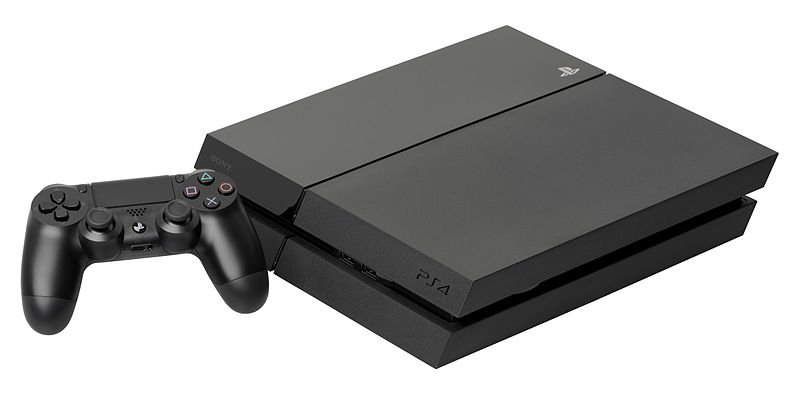
The PlayStation 4 just came out, so here’s some trivia about the first three: 5 facts about PlayStation.
 • In the late ‘90s, Sony manufactured the audio processors for the Super Nintendo system. Seeing how much money Nintendo was making, the company decided to make its own system. At the same time, it was working with Phillips Electronics to improve CD-ROM technology. Sony figured out how to run data, graphics, and audio from a CD-ROM simultaneously and super-fast. Result: It could put highly advanced video games on discs, a gaming first. Disc games are also much cheaper to manufacture than cartridges, the traditional delivery method for video games.
• Video game industry analysts predicted the PlayStation to fail shortly upon its release in 2000. Why? Because at that point, only software manufacturers like Nintendo and Sega had successfully launched a video game console. Strictly electronics companies, like Sony, had a long history of releasing flop systems, such as RCA’s Studio II, Fairchild’s Channel F, and Magnavox’s Odyssey.

A low-tech/high-tech cure for the winter blues for a city that is is cut off from direct sunlight for five to six months a year.
As the days grow shorter and the nights get colder, a little sunshine can be hard to come by. It’s especially true in Rjukan, a small town in Norway. Because of a nearby, imposing mountain chain, the area doesn’t receive any direct sunlight from September until March.

Seven months of near darkness can get anybody down, as well as deprived of Vitamin D. Fortunately for the residents of Rjukan, there’s a high-tech cure for the wintertime blues.
Nearly seven months of that kind of gloom can get anybody down, even Vitamin D deprived Norwegians that are accustomed to harsh winters. Fortunately for the residents of Rjukan, there’s a solution. At a cost of 5 million Norwegian Kroner (roughly $841,000 in US dollars), three 183-square foot mirrors were installed on a cliff overlooking the town. On clear days – which are unable to discern from the ground in Rjukan – the mirrors reflect the sunlight down into the town square.
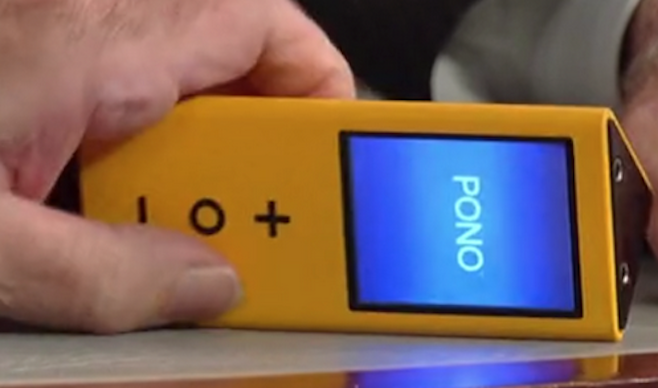
Stuff you didn’t think needed to be improved…just got a little bit better.
A better iPod
 Introduced in 2001, Apple’s iPod revolutionized the way people listen to music—thanks to this and other digital music players, thousands of songs are stored as computer files on a pocket-sized device. But there’s one group who doesn’t like the easy access to music offered by the iPod: audiophiles. In order to get that much music on an iPod, the files are compressed, leading to some loss of layers and nuances in recordings. But a new high-definition, high-sound-quality music player called Pono is on the way—and it was invented by legendary rock star Neil Young. “We’ve liberated the music of the artist from the digital file and restored it to is original artistic quality, as it was in the studio,” Young wrote on Pono’s facebook page. Young announced the Pono player on The Late Show With David Letterman in 2012, and recently said that the player will be for sale in early 2014.
More convenient soup
 One of the most popular new kitchen appliances in the past new years is the single-cup coffeemaker—17 million American homes and offices now have them. Keurig is the industry leader in these devices, which brew one cup of coffee—or tea, or hot chocolate—at a time. Consumers buy packages of individual “K-cups” full of ground coffee, which is placed in a chamber in the machine, where it’s then steeped in hot water, producing a hot beverage in about a minute. In September 2013, Keurig owner Green Mountain Coffee Roasters announced that it had made a deal with Campbell’s to produce K-cups…of soup. In 2014, consumers will be able to buy the two-step soup kits: a K-cup full of dried broth is placed in the machine. Hot water turns the dried broth into liquid broth, which is then poured over an included pack of noodles.

Sitting on a smart toilet right now? Better be careful—you might get hacked!
 Japanese company LIXIL makes computerized gadgets for the home, office, and bathroom…including “smart toilets.” It’s latest innovation: the Inax Satis, a high-tech toilet that can you can program and control with your smartphone.
How can you control a toilet with your phone? Well, the Satis has a motorized lid, a bidet, and a deodorizer. Users can control the pressure of the bidet’s stream, or remotely close an open lid, for example, via an app called “My Satis.” The app can also be used to keep a daily log of bowel movements, if you’re into that level of documenting
your life.
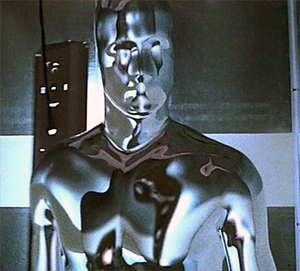
Modern science has given us a substance that makes robots harder to kill. Way to go, science for giving us self-healing robots.
 In the Terminator films, robots sent from the future to kill humans are constructed of a core of liquid metal, allowing damaged or melted robots to easily reform themselves. A group of scientists at the Cidetec Centre for Electrochemical Technologies in Spain thought that this terrifying possibility should be a reality—they’ve developed what they call a “self-healing polymer.”
The Cidetec Centre actually named their creation the Terminator Polymer, but claim their invention wasn’t made for time-travelling, human-killing robots. Instead, the goal is to improve the lifespan and durability of common plastic-and-metal consumer goods that, while expensive, frequently break, such as video game controllers, stereo speakers, and laptop computers. The Terminator polymer is reportedly the first automatically regenerating material ever designed and it’s capable of repairing imperfections in itself up to 97% in as little as
Scientists at the Cidetec Centre say that the regeneration is caused by a “metathesis reaction of aromatic disulphides, which naturally exchange at room temperature.” Or, in layman’s terms, the polymer works sort of like a combination of Velcro and a standard household sealant. In just a few years, this polymer could start popping up in everything…so watch out.

 Happy 15th birthday Google!
It seems that anything you do online has the word Google attached to it today. Our online lives are filled with Gmail, Google Docs, Google Plus, Google Maps, Google Earth, Youtube, Piacasa, and most importantly, Google Search! So, how did Google get its name? Here is an piece from Uncle John’s Top Secret Bathroom Reader for Kids Only!
In 1998 Sergey Brin and Larry Page were looking for money to help start their company, so they boasted to investors that their new search engine could find a googol pieces of information, which is the word for the numeral “1” followed by 100 zeroes. One investor liked them, and immediately wrote a check made out to “Google.” The name stuck.
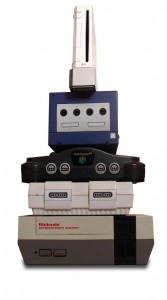
Hiroshi Yamauchi, who ran Nintendo for more than 50 years, passed away this morning. He played a great role in bringing the game consul to the American marketing and in the creation of Super Mario, Donkey Kong and Zelda. To take a look back at his life and his role in the company, here is an overview of the history of Nintendo (Part I), first published in Uncle John’s Ahh-Inspiring Bathroom Reader.
 NO SALE
Back in 1981, Atari was the world leader in video games. In 1983 Nintendo offered to sell Atari the licenses to their Famicom game system, but they couldn’t come to an agreement, so Nintendo decided to go it alone.
They renamed the American version the Advanced Video System (AVS) and in January 1985, introduced it at the Consumer Electronics Show in Las Vegas, one of the largest such trade shows in the world.
They didn’t get a single order.
Nintendo’s problem wasn’t so much that the AVS was a bad system, but more that the American home video game industry was struggling. After several years of impressive growth, in 1983 sales of video game consoles and cartridges suddenly collapsed without warning. Video game manufacturers, caught completely off guard, lost hundreds of millions of dollars as inventory piled up in warehouses, never to find a buyer. Atari’s loss of $536 million prompted Warner Communications to sell the company in 1984.
Mattel sold off its version, Intellivision, the same year and shut down their entire video game division. Many other companies went out of business.

 Pet Rock: The item that became synonymous with the whimsical and gullible 1970s has returned! Only now, it’s high-tech. In the spirit of the original, it does nothing; plugging it into your computer’s USB port doesn’t even draw any power away.
 Squirming Tentacle: People will think an octopus or the fictional alien monster Cthulhu has taken control of your laptop when they see a moving tentacle coming out of a USB port. Unlike the Pet Rock, at least it moves.