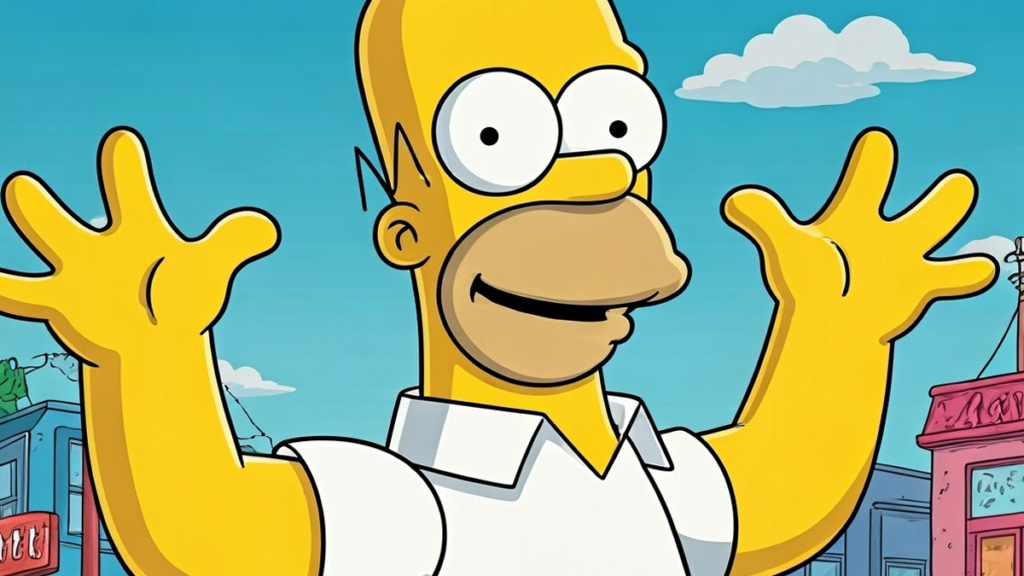
How ‘The Simpsons’ Got Started
Before it became the longest-running show of all time, launched with a Christmas special, here’s how The Simpsons took shape.


Before it became the longest-running show of all time, launched with a Christmas special, here’s how The Simpsons took shape.
What’s on TV over the summer? Usually, nothing great, as it’s when the networks historically air their weirdest and worst offerings.

‘A Charlie Brown Christmas’ tells a great story — and the tale of how it got made is just as good. Merry Christmas Charlie Brown, from Uncle John!
On February 9, 1964, Beatlemania took the U.S. by storm—that’s the night the Beatles played for the first time on the top-rated The Ed Sullivan Show. Here’s a look at that iconic episode, which aired 50 years ago this week.
 The Ed Sullivan Show was a variety show, and the Beatles were one of the first times the show had booked a rock n’ roll act. The rest of the show’s running time was filled with the usual array of Sullivan performers: comedians, performances from a Broadway musical, and even a magician.

After spending six hours on the pregame, the game, and the postgame, what’s the best way to unwind after a long day of watching TV? Watching more TV!
 • In the early years of the Super Bowl, the game was played and broadcast earlier in the day, not in primetime. Nor was it the TV event or near-holiday it is today. Now the game coverage ends around 10:30 p.m. eastern time, and subsequently earlier in the western time zones. This gives the network airing it (it rotates among the Big 4 broadcast channels each year) an ample opportunity to present a new show or expose an existing show to a potentially huge audience. The concept began in earnest in 1984, when NBC used its post-Super Bowl advantage to help launch The A-Team.
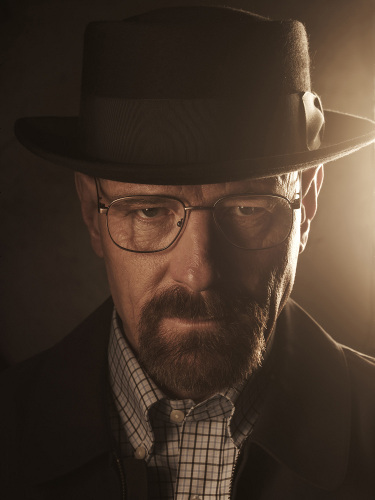
Breaking Bad ended its critically-acclaimed run in September, but it keeps making the news…in some very unlikely ways.
 In September, Breaking Bad costar Aaron Paul (he portrayed Jesse Pinkman) held an online raffle to raise money for his wife’s anti-bullying charity The Kind Campaign. The prize: the chance to watch the highly anticipated series finale of Breaking Bad with Paul and cast member Bryan Cranston (Walter White) at the Hollywood Forever Cemetery. The lucky winner: 28-year-old Breaking Bad superfan Ryan Carroll of Fort Myers, Florida, who was informed personally by Paul. Carroll and his friend flew to Los Angeles, and were picked up at the airport by Paul in an RV just like the one used by drug kingpin Walter White on the show. End of the story? Nope. Carroll was apparently a bigger Breaking Bad enthusiast than anyone imagined. On New Year’s Eve, Fort Myers police raided three homes they believed were linked to a massive synthetic marijuana distribution ring. One of those homes belonged to Carroll—he was in possession of over $1 million worth of drugs, and is believed to be the operation’s “kingpin.”

Okay, we know he’s not real. But according to Sir Arthur Conan Doyle’s books, Sherlock Holmes was born on January 6, 1854. Celebrate the day (and look forward to season 3 of Sherlock) with these not-so-elementary Sherlock Holmes facts.
• Have you ever come across anyone, real or fictional, named Sherlock? It’s an obscure, Old English name that means “bright hair.”
• A common theme in all Sherlock Holmes books, movies, and other media is the great detective’s use of “deduction” to solve mysteries. Except that he doesn’t really use deduction. Sherlock uses a technique called abductive reasoning. Deduction eliminates possibilities until only one, hopefully correct theory, remains. Abductive reasoning, however, involves careful observation and consideration of evidence and any outside data to create an educated guess.

To mark the release of Anchorman 2, here is a look back at famous anchormen and their signature “sign-off.” You stay classy, BRI Fans.
 “Good night, and good luck.” Possibly the most famous sign-off in TV history, this phrase was coined by 1950s CBS News personality Edward R. Murrow (Person to Person, See It Now). He had gotten his start on CBS Radio during World War II, broadcasting from the rooftops of London buildings during the German blitz. With the line, Murrow was earnestly reaching out to the audience in an attempt to provide comfort. He kept the line after the war.

Some specials, like Rudolph the Red-Nosed Reindeer or How the Grinch Stole Christmas become beloved TV treasures that air every December for decades. Others…don’t.
A Muppet Family Christmas (1987)
 Kermit, Miss Piggy, and all the other Muppets have been featured in a lot of Christmas-themed movies and TV specials over the years, notably the 1992 big-screen The Muppet Christmas Carol, and a 1979 special co-hosted by John Denver (which spawned their hit rendition of “The 12 Days of Christmas.” This TV special doesn’t get much airplay anymore. The plot: Fozzie Bear surprises his mother by staying at her country home over the holidays, along with most of the other Muppets, and many of monsters and critters from Sesame Street. Over the course of Christmas Eve, the Swedish Chef tries to cook Big Bird, Miss Piggy gets stuck in a blizzard ,and Kermit discovers an underground cavern that leads him to the magical creatures from Fraggle Rock. Watch for the cameo from Muppets/Sesame Street/Fraggle Rock creator Jim Henson, who shows up at the end to wash all of his creations’ dirty dishes.
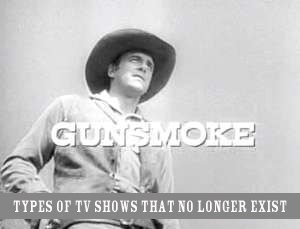
When we ran a piece earlier this month about TV genres that have all but disappeared from the tube, you gave us some great suggestions for another look at some fading television institutions.
 Westerns. Westerns were popular on radio, and when TV took hold in the 1950s, westerns hitched a ride. By 1959, 26 westerns were airing on the three TV networks. All those shows (such as Gunsmoke, Bonanza, Rawhide, and Wagon Train) were among the first times TV productions ventured out of small studios to shoot on location to create more cinematic programming. And with all of the undeveloped Old West-like expanses just outside of Hollywood at the time, it was a relatively cheap undertaking. By the late ’60s, too many westerns cannibalized demand, and their popularity led to higher production costs. Then in the early ’70s, CBS undertook a “rural purge,” clearing its schedule of anything rural themed, such as The Beverly Hillbillies, Hee Haw, and all of its westerns, including 20-season veteran Gunsmoke. A few attempts have been made to revive the western, (Dr. Quinn: Medicine Woman, Hell on Wheels, Deadwood) but its never mosied on back to its former heights.
Game shows give away cash and dining room tables. In the ‘80s and ‘90s, MTV gave away stuff like Jon Bon Jovi’s house.
Be in a Loverboy video!
 The ‘80s rock band Loverboy were one of the first big stars of the MTV era. In 1983, they joined up with the video channel for a contest that would allow the winner to be the video for their single “Queen of the Broken Hearts.” A viewer named Bridget Magnesi won the prize. She didn’t exactly get to star in the video—catch a glimpse of Magnesi at the 0:18 and 0:23 marks in the video. She’s the woman sitting behind the control panel.
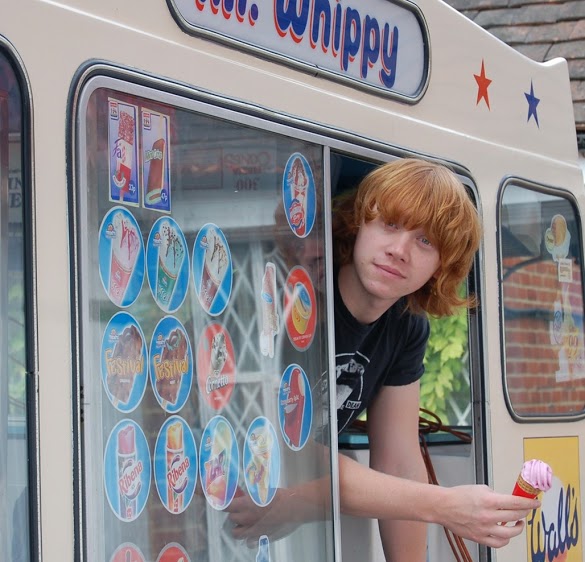
 Rupert Grint. Grint played Ron Weasley, Harry Potter’s best friend, in eight Harry Potter movies. One of the first things he bought when he started earning movie-star money: a 1974 Mr. Whippy van—an ice cream truck. He’d wanted to be an ice cream man, before he discovered acting. “I keep my van well stocked. It’s got a proper machine that dispenses Mr. Whippy ice cream,” he told The Daily Mail. He’d have to have a license to sell ice cream, so instead, he drives around England and hands out free ice cream bars to kids.

Tastes in TV change, so TV changes with them. Here are some shows that were once part of the broadcasting landscape…that have since gone off the air.
VARIETY SHOWS
 These glitzy, glamorous, song and dance spectaculars were dominant TV format in the 1960s and ‘70s. Featuring big production numbers, colorful costumes, comic sketches, and banter between the hosts, extravaganzas Sonny and Cher, Donny and Marie, and The Glen Campbell Goodtime Hour dominated ratings. By 1980 they were simply passé, as the garish ‘70s gave way to the sleek ‘80s. In 1987, ABC attempted to revive the variety show with what seemed like a sure thing. The network signed singer/actress Dolly Parton to a two-year, $44 million contract to star in Dolly. It flopped, and the network bought out Parton’s contract and cancelled the show in less than a year.
Most actors struggle for years, pounding the pavement, going on audition after audition hoping to get their big break. These actors, however, were offered more than
one part at the same time…and had to choose.
 Jennifer Aniston
In the 1992-93 TV season, Aniston starred on a short-lived sketch comedy show on Fox called The Edge. Not very many people watched the show (it was cancelled after 18 episodes), but producers at Saturday Night Live must have. Aniston was asked to audition for that show, and she was asked to join the cast for the 1994-95 season. Aniston turned them down, feeling that the pilot she’d just shot for an NBC sitcom called Friends had some promise.
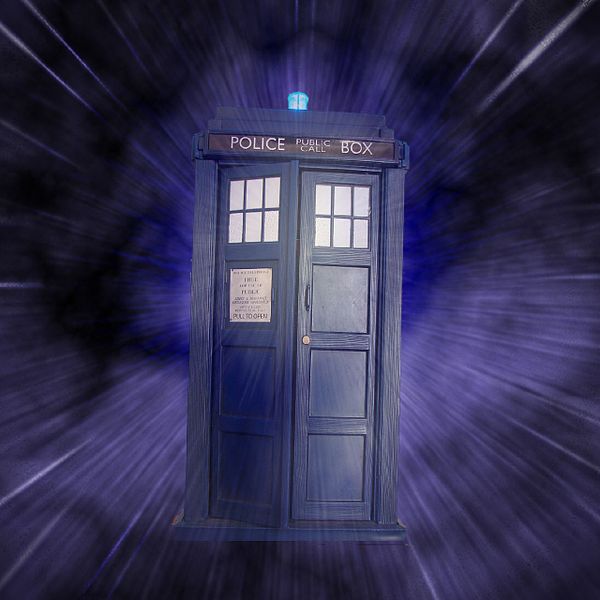
In recent years, the British sci-fi legend Doctor Who has enjoyed a resurgence
in popularity in the U.S and the U.K. Still, most Americans know little about the Doctor.
With the 50th anniversary celebration coming up, it is time to catch up. Here are a
few facts to get you going.
 WHOVILLE
Doctor Who premiered on England’s BBC One on November 23, 1963, and has aired almost continuously ever since (although new episodes weren’t produced between 1989 and 2005), making it by far the longest-running science-fiction program on television. With 798 episodes and counting, it’s among the longest-lasting prime-time dramas as well.
In the 1970s, it was one of the first British series to air on American TV and became a cult hit. And in England, it’s a popculture phenomenon—it’s spawned radio series, novels, and several tie-in movies. Eavesdrop for long enough in any British pub, and you’ll hear patrons arguing over who the best Doctor was. In both countries, Doctor Who has had a substantial influence on television. Here’s a primer: The premise. The Doctor (who is known only as “the Doctor”) is the last of a race called the Time Lords, who are near-omnipotent, hyperintelligent, and keep a strict non-intervention policy—a law the Doctor breaks when he sets out to explore the universe. Along with a human companion (usually a teenager or young woman), the Doctor travels through time and space.
What everybody’s watching…and decidedly not watching.
 • The Millers is a hit new comedy for CBS on Thursday nights. It starts Will Arnett and Margo Martindale, who are best known for, respectively, the Emmy-winning comedy Arrested Development and the Emmy-winning drama Justified. Neither of those shows ever brought in a huge audience. The premiere of The Millers attracted 13.09 million viewers, which is more than the most-watched episode of Arrested Development (7.98 million) and the most-watched episode of Justified (4.16 million) combined.
• The Big 4 broadcast networks don’t air many family sitcoms anymore. But the Disney Channel does. One of them is called Dog With a Blog. It’s about a family with a dog, and the dog…writes a blog. In early October, 3.5 million viewers tuned in to Dog With a Blog. That’s 400,000 more people than tuned in to that week’s episode of NBC’s Parks and Recreation.
• Super Fun Night is a new comedy hit for ABC for two reasons: 1) It stars Rebel Wilson, from Bridesmaids and Pitch Perfect, and 2) It’s on immediately after Modern Family. This show has been in the works for almost two years. Wilson created the series and filmed a pilot in late 2011, which ABC turned down. They asked Wilson to try again, so she rewrote the script and filmed another pilot in 2012. The network didn’t like that attempt either, but still picked up the show to series and filmed a third pilot episode. That one wasn’t very good either, because ABC refused to air it. The first episode of Super Fun Night was actually the show’s second installment.
You didn’t think his mother named him “Kid Rock,” did you? Here are some stage name origins we wrote about in the brand-new Uncle John’s Perpetually Pleasing Bathroom Reader, publishing this November.
 KID ROCK
As a teenager in Detroit in the 1980s, Robert Ritchie deejayed and breakdanced at parties in exchange for free beer. He says he often heard someone in the mostly African-American crowd remark, “Look at that white kid rock.
BRUNO MARS
The singer’s real name is Peter Hernandez. At age two, his father, a wrestling fan, started calling him “Bruno” because he resembled pro wrestler Bruno Sammartino. In 2003, when he moved from his birthplace of Hawaii to Los Angeles to make it as a singer, he added “Mars” because “a lot of girls say I’m out of this world.”
SLASH (Guns N’ Roses)
Growing up in Los Angeles, Saul Hudson’s best friend was the son of character actor Seymour Cassel (Faces, Rushmore). The actor nicknamed Saul “Slash” because, as Slash said in his memoir, “I was always in a hurry, hustling whatever it was I was hustling, and never had time to sit and chat.
Tired of spoilers on online? What you need is a ‘No More Spoilers on Twitter’ app! Gone are the days of watching a TV show on the channel it airs at the time it. Most American homes now have some form of “time shifting” solution when it comes to TV, from the good old VCR to digital video recorders like TiVo to watching the shows online, either a couple days later via Hulu or a couple of months (or years) later in season-long viewing binges on Netflix.
A diehard fan of a show will watch it as soon as possible—when it airs—and many of those fans like to share their thoughts online, while it airs. So if you’re not going to get around to watching Mad Men the night it first airs, you’d better not go anywhere near Twitter. Mad Men fans will discuss plot points, twists, and, to use the parlance of the Internet, “spoil it.”
 Boston teenager Jennie Lamere loves to use Twitter to connect with her friends and follow celebrities, but she hated how she would often inadvertently find out the results of her favorite show before she watched—the reality program Dance Moms. So for a student-computer-programming contest, she designed a Twitter application called Twivo. The program works like this: You install it and tell it what shows you don’t want to know anything about. Twivo then blocks all references to the show on your Twitter feed—the text is blacked out—no more spoilers on Twitter. Lamere won the contest; the app may be available to the general public in just a couple of months…hopefully before Breaking Bad starts up again.