









Among all the beloved things associated with Christmas — the rituals, the decorations, the food — books and stories play a big role in making it a festive holiday season. Here’s some between-the-lines facts about some of the stories that have helped people celebrate the season for a very long time.
A Christmas Carol
Charles Dickens wrote A Christmas Carol in just six short weeks, and he was motivated by the same reason a lot of people take on extra work before the holidays: He needed the money. In late 1843, the commercially slumping Dickens had a fifth child on the way and he was just barely making a living, so he wrote a holiday story to make some quick and easy cash. He saved time by basing the novella on his 1836 short piece “The Story of the Goblins Who Stole a Sexton,” about a scrooge-like miser who’s scared into decency after a Christmas Eve visit by ghosts. In addition to become the single most popular Christmas story of all time, and the most adapted one (plays were out by the end 1843), A Christmas Carol made Dickens rich and actually coined the phrase “Merry Christmas.”
“The Gift of the Magi”
In this 1905 short story, a couple loves each other so much they make a major sacrifice to get the other a lavish gift. Jim sells his treasured pocket watch to buy beautiful adornments for Della’s gorgeously long tresses…which she cuts off and sells to buy Jim a chain for his watch. O. Henry — the pen name for William Sydney Porter — didn’t usually write emotionally-driven, sentimental stories — but he categorically loved twist endings. The New York World first published the story, and O. Henry was under contract to the paper at the time — of which he was wholly unaware. He’d been fired in November 1905, but on the evening of December 10, an underling from the World showed up at his apartment, demanding the latest story. O. Henry whipped up “The Gift of the Magi” in two hours. The version that ran in papers the next day was exactly the same one as submitted — no edits necessary.
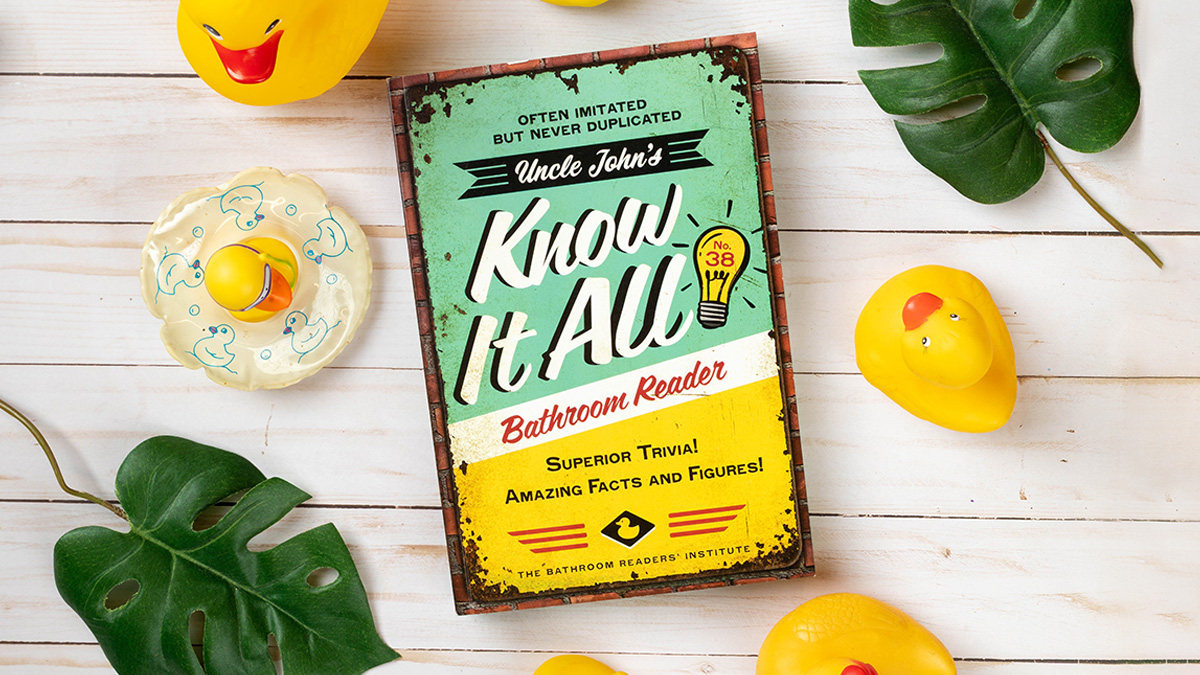
Get Uncle John's Know It All Bathroom Reader Today!
“A Visit from St. Nicholas”
Probably better known by its first line — “’T’was the night before Christmas” — this story in verse debuted in the Troy Sentinel in 1823. Initially published anonymously, it became such a widely reprinted and recited hit that in 1837, poetry editor Charles Hoffman claimed that his friend, Clement Moore, wrote the poem. In an 1844 anthology, he admitted that he hadn’t much thought of what he became his most famous work in years, calling it a “trifle” that he’d written in a hurry. Many elements of the common, collective image of Santa Claus, and how Americans celebrated Christmas, were codified by “A Visit from St. Nicholas.” It helped push the legend that Santa makes his deliveries on Christmas Eve (previously he was said to head out on Christmas Day) and dramatized Christmas as the chief family holiday of the season (instead of New Year’s Day) as well as a secular, child-focused celebration as well as a somber religious occasion. And Moore’s spelling of two reindeer names — Donner and Blitzen — replaced the previously universal Dunder and Blixem.